
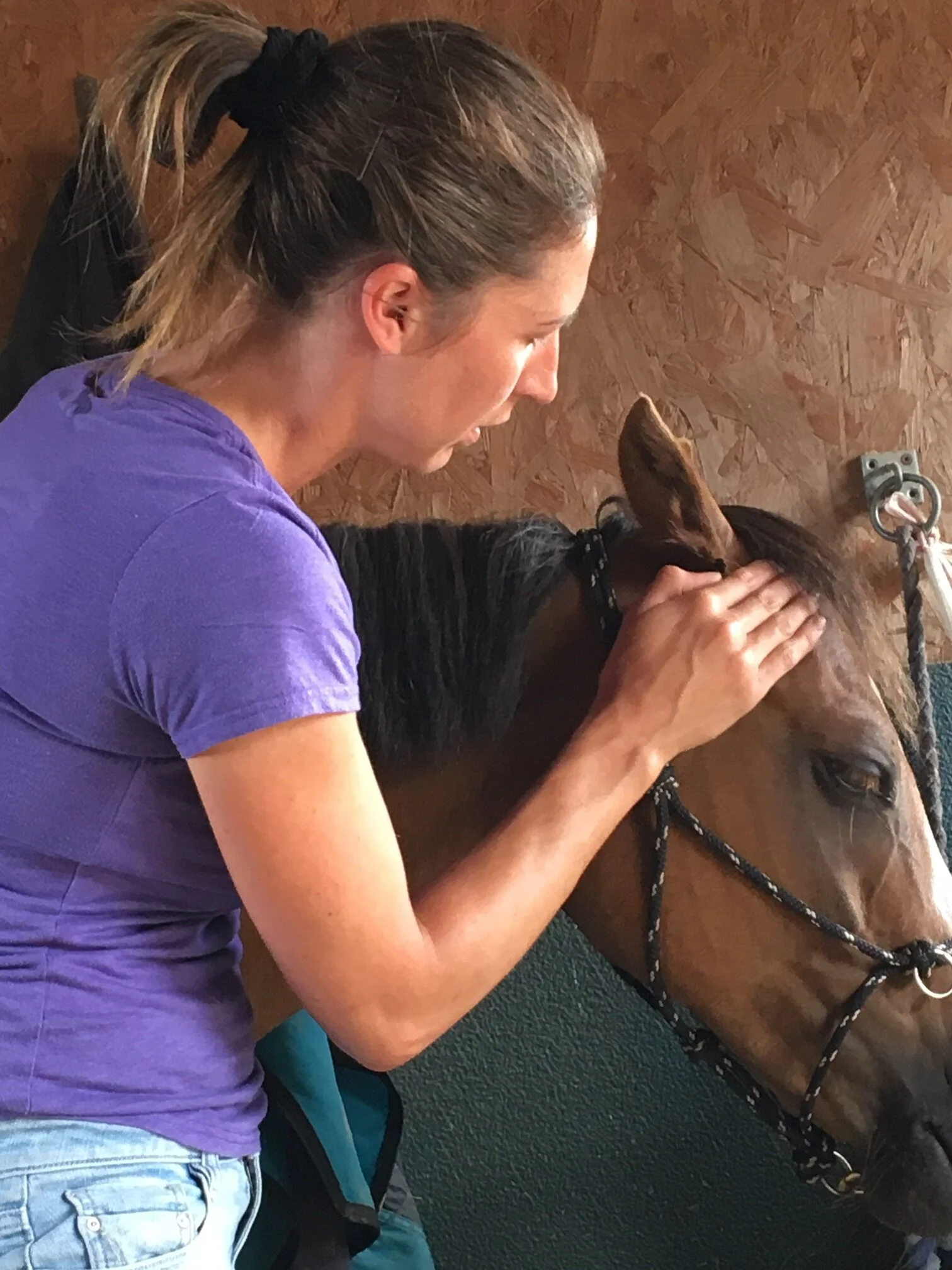
Many people ask about the benefits of massage treatments for their horse, below are examples of some of the treatments Jess offers and how they may benefit your horse.
Initial Assessment & Treatment
Have you noticed that your horse is not performing as well as they have done in the past? Is your horse displaying signs of discomfort when being exercised? Reduced performance, unsteady in the contact, not as flexible on one rein compared with the other, behind the leg, rushing? This list is not exhaustive.
Has your horse developed a reluctance to be tacked up or even to come to you to be caught in the paddock?
These may all be signs that your horse has tension or restriction in their muscles and fascia and is therefore experiencing discomfort, pain and possibly compensatory locomotion.
Some horses may even appear short striding or unlevel due to fascia and muscular tension as they begin to use their bodies differently to avoid using the contracted muscle.
An Initial Assessment will allow Jess to assess your horse and find where these restrictions lie and devise a treatment plan to help your horse become more comfortable again.
An Initial treatment can then be administered during the appointment.
Benefits of an initial assessment and treatment include:
Identification of problem areas
Initial Treatment of any problem areas
Begin to release Trigger / Stress points
Release restrictions in the fascia making the horse instantly more comfortable
Aid recovery from previous trauma
Reduce swelling and fluid within the soft tissues
Optimise the conditions in the body to allow it to heal itself
Relieve psychological stress
Increase flexibility & freedom of movement
Improve posture
Improve performance
Provide owner with simple exercises that can benefit the horse and keep them comfortable between appointments
Remedial Course of Treatments
If particular musculo-skeletal problems are identified during the initial assessment e.g. crookedness, back pain, stiffness, specific conditions, after a fall.
Jess may suggest a remedial massage course with very regular treatments for several weeks.
During this time, the expertise of farriers, saddlers, chiropractors etc, may also be sought as appropriate. (Please note, that massage is not a substitute for veterinary attention).
Benefits of a course of treatments include helping to:
Reduce healing time and aids recovery
Remove lactic acid from the muscles
Help to mobilise joints
Reduce and relaxes muscle tension
Release trigger / stress points, which can be the sole cause of other problems and often take more than one treatment to fully release
Increase the horse’s range of movement and suppleness
Reduce crookedness and helps develop muscles more evenly
Prevent muscles shortening which occurs after muscle injury
Reduce scar tissue from the muscle
Prevent muscle wastage after injury
Prehab & Maintenance Treatment
If your horse has no specific restrictions or areas of tension found in their initial assessment, or if they have completed a remedial course and are now in good shape, they will benefit greatly from regular maintenance treatments to help keep them comfortable, performing at their best and to help prevent overuse injuries.
Benefits include helping to:
Remove lactic acid which causes fatigue
Release muscle spasms or trigger points
Improve muscle tone
Improve muscle flexibility, suppleness and elasticity
Reduce risk of pulled muscles
Reduce risk of repetitive strain/overuse injury
Minimise stiffness
Improve and reduces muscle atrophy
Induce rapid cell renewal and tissue repair
Speed up recovery
Increase joint range of movement
Keep joints flexible
Relax the nervous system
Assist in proprioception
Improve co-ordination and balance
Reduce crookedness and helps develop muscles more evenly
Relax the horse’s mind and body